- creative direction
- AI-assisted production
- event identity
What Happens After the AI Image
A field note on taking AI-assisted visual exploration into a complete event identity for LINE Thailand Developer Conference 2025.

For LINE Thailand Developer Conference 2025, the same visual idea had to work on an attendee badge, a social post and a stage screen.
I led the visual direction and created the event identity. AI-assisted image exploration helped establish form, depth, composition and lighting. The selected material then went through art direction, compositing and production across motion, digital and physical formats.
That second part deserves more attention. An image can look finished while most of the identity work is still ahead of it.
A direction with room to move
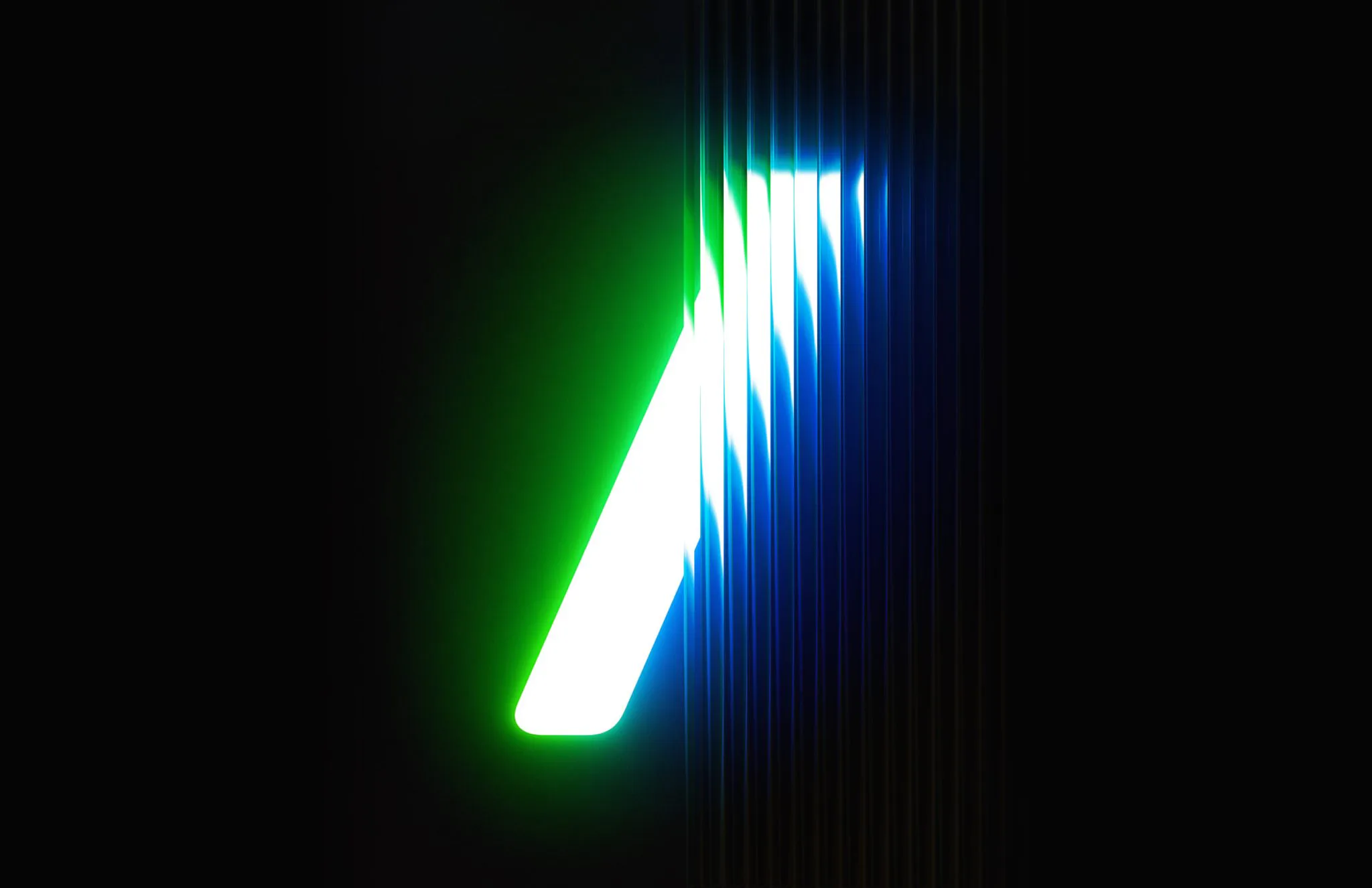
The selected direction, Pipeline Flow, translated the software-development cycle into a visual language: write, test, deploy. Vertical light bars build, connect and resolve into the conference mark.
That gave the work a behaviour as well as an appearance. The bars could carry the idea through a still composition or an animated sequence. Directional light, colour and depth gave different applications something recognisable to share.
The same idea, different jobs
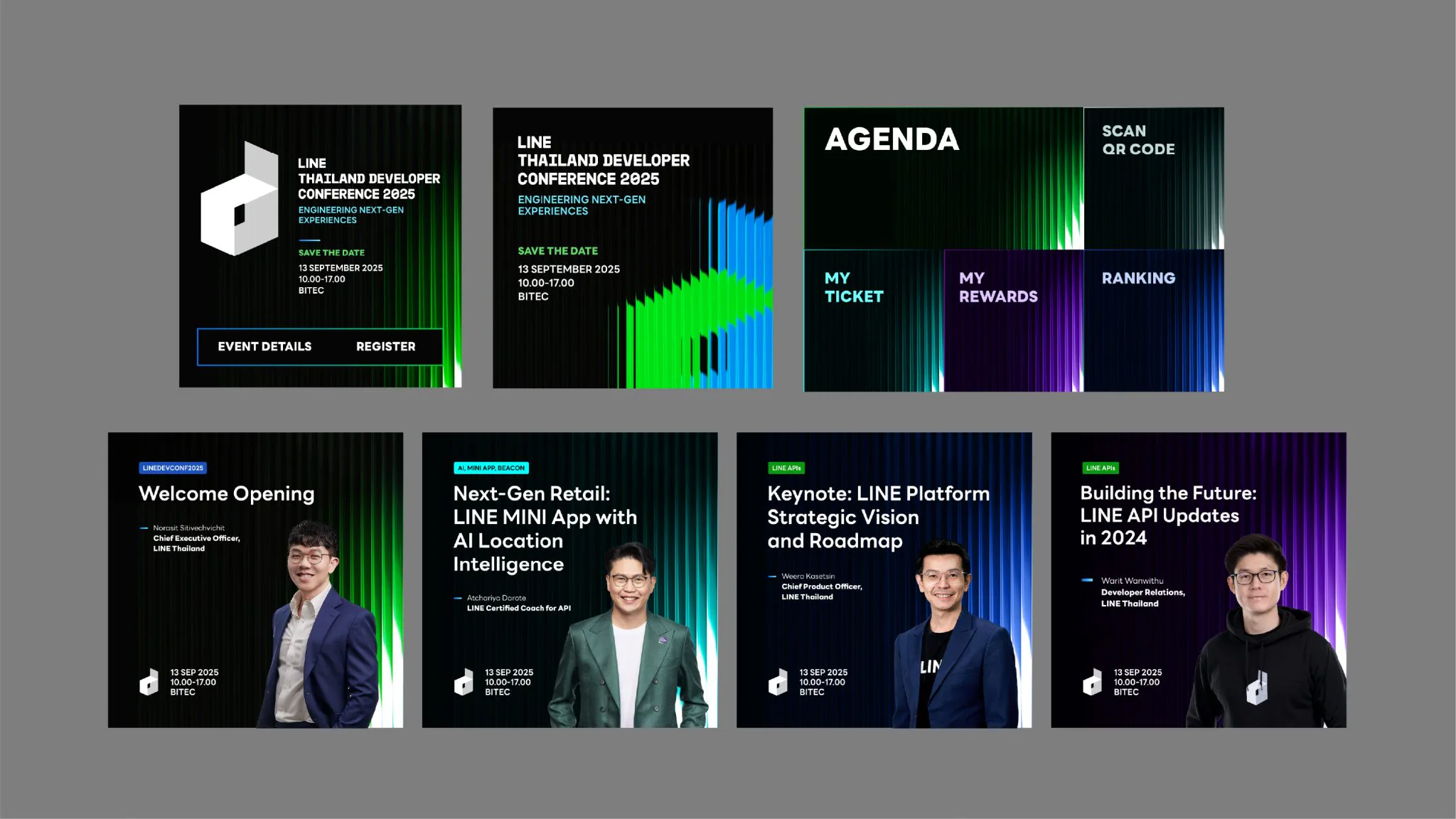
A speaker announcement needs room for a person and information. An opener needs sequence and timing. A badge has to make sense at a much smaller scale.
Those are different design problems. Repeating one attractive composition across all of them would quickly become restrictive.
For the conference, motion, typography, speaker content and social assets shared the same light, colour logic and visual depth. The composition could change while the family resemblance held.
The identity has to survive a change of job.
That is a useful test for any generated starting point. What remains recognisable when the image becomes a layout, when the layout moves, or when somebody needs to read it from across a room?
Art direction after generation
Typography, hierarchy, motion and format adaptation all needed decisions. A convincing surface does not tell you which information comes first, how long a title should hold, or how much visual detail belongs behind it.
Those decisions become visible in the finished work. They determine whether the image supports the message or competes with it.
Art direction continues after generation.
The work in use
The identity extended into stage and screen content, booth structures, badges, apparel and signage. The conference welcomed more than 1,200 attendees at BITEC Bangkok.
That setting makes the distinction concrete. The work had to hold together across a complete event, through moving images, physical objects and information people needed to use.
AI-assisted exploration contributed to the visual development. The finished identity came from carrying that material through the rest of the work.
See the complete LINE Thailand Developer Conference 2025 case.