- Brand Detective
- culture
- identity
The dress code for being yourself
A field note on individuality, belonging, and why a familiar aesthetic can make particular people harder to remember.

Sometimes I open Instagram and the feed feels like one person changing faces.
Different cities, different clothes, different apartments. But the same gestures. The same little performance of having a life worth watching.
After a while, I can remember the aesthetic. I can’t remember who posted it.
That’s the part that bothers me.
The right kind of different
I think there’s a tension here. We want to stand out, but we also want people to immediately understand where we belong.
So we borrow things they already know how to read. The right coffee shop. The right hotel. A particular way of dressing, filming, even looking casual.
Those choices can communicate taste before you’ve said anything. They can also make you look remarkably similar to everyone else communicating the same taste.
You wanted to express yourself. Somehow, you ended up wearing the uniform.
This gets especially funny when the thing you’re trying to communicate is how independent you are. Even being unconventional comes with references, poses, and places you’re supposed to know.
Shared taste, particular character
I don’t think this means everyone is pretending. You can sincerely love something that a million other people love. Shared references are part of how culture works.
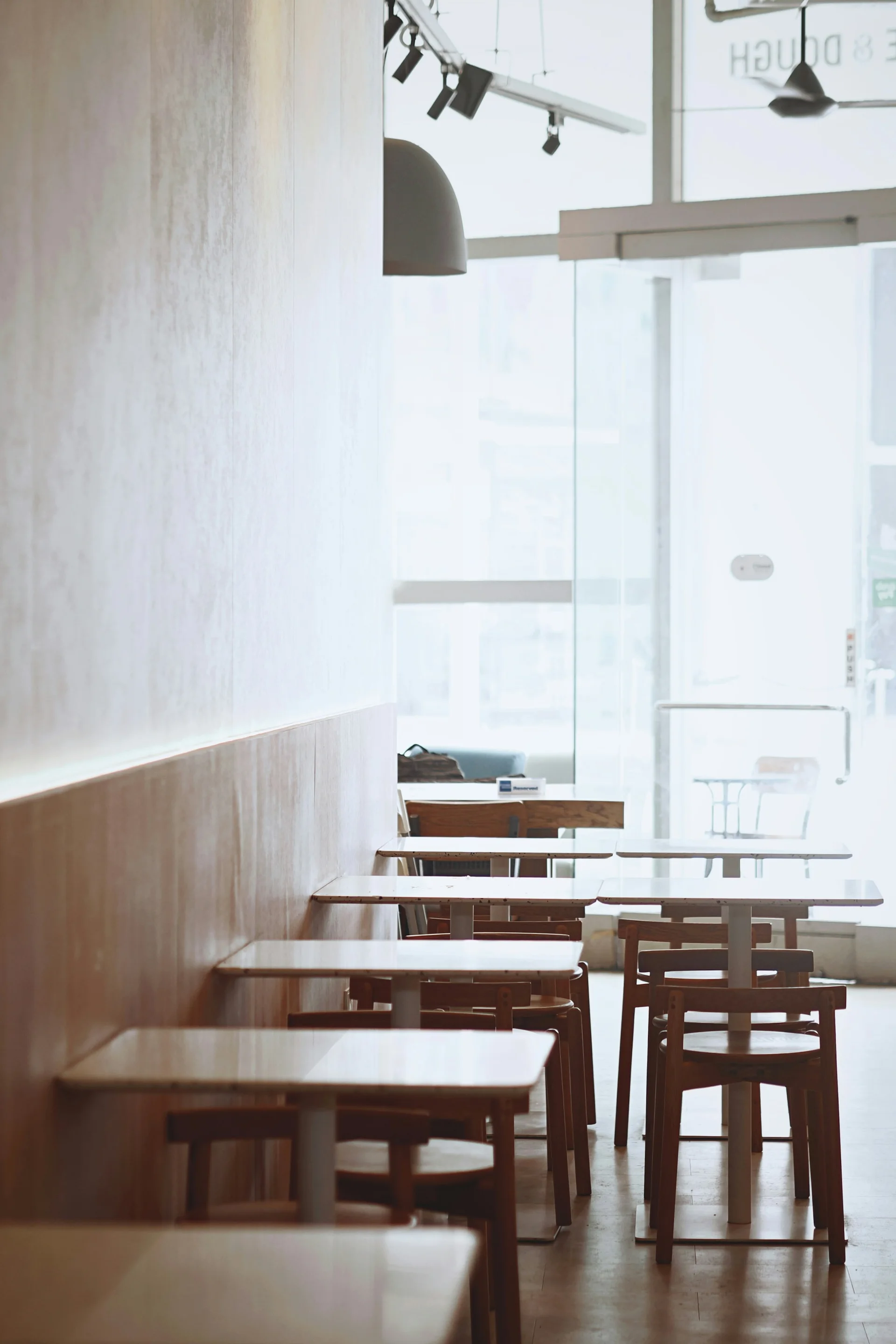
A café can have plain cups and white walls and still have a very particular character. What it serves. Who runs it. How people actually use the room. Those things give the style something to belong to.
The same visual vocabulary can belong to very different places. A familiar appearance doesn’t tell me whether the experience underneath it is familiar too.
What survives the photograph
But a photograph can flatten all of that into the same few signals. Nice light. Nice cup. Nice person having a nice morning.
The picture tells me what kind of place this is supposed to be. It gives me very little reason to remember this particular one.
I can recognise the category without remembering the place.
A room has sounds, habits, interruptions, people. The photograph selects a few things from all of that. When the selection follows a familiar reference too closely, the particular character can disappear from the frame.
The person behind the type
And I think something similar happens with people.
Once we’ve made every choice easy to recognise, we can accidentally remove the details that would make someone curious. The small contradiction. The thing that doesn’t quite fit the aesthetic. The choice that needs a little explanation.
Those details take longer to read. They can also be the reason I remember someone.
The feed is very good at showing me a type of person.
I’m starting to miss the particular person.